


You already know what a dynamic duo looks like. You’ve known since you were a kid.
One leads, one follows. One plans, one executes. One wears the cape, one earns the nickname.
It’s one of the oldest structures in fiction, and almost everyone gets the history wrong.
The partnership that started the concept of dynamic duos didn’t look like any of them.
It was built between enemies, in the dark, in a palace where the walls had eyes and the guards weren’t human.
And the so-called sidekick was the one running the operation.
What was the first “dynamic duo” in contemporary literature?
To most people, the duo of Batman and Robin have owned the phrase “dynamic duo” since Dick Grayson showed up in Detective Comics #38 in April 1940. That default is wrong. Or at least, it’s late.
Eleven years before Robin, in the August 1929 issue of Weird Tales, Robert E. Howard published “The Shadow Kingdom”. In its, its protagonist, Kull of Atlantis, is a barbarian usurper sitting on a civilized throne. His partner, Brule the Spear-Slayer, is a Pictish a warrior from a people who have been at war with Kull’s own since before recorded history.
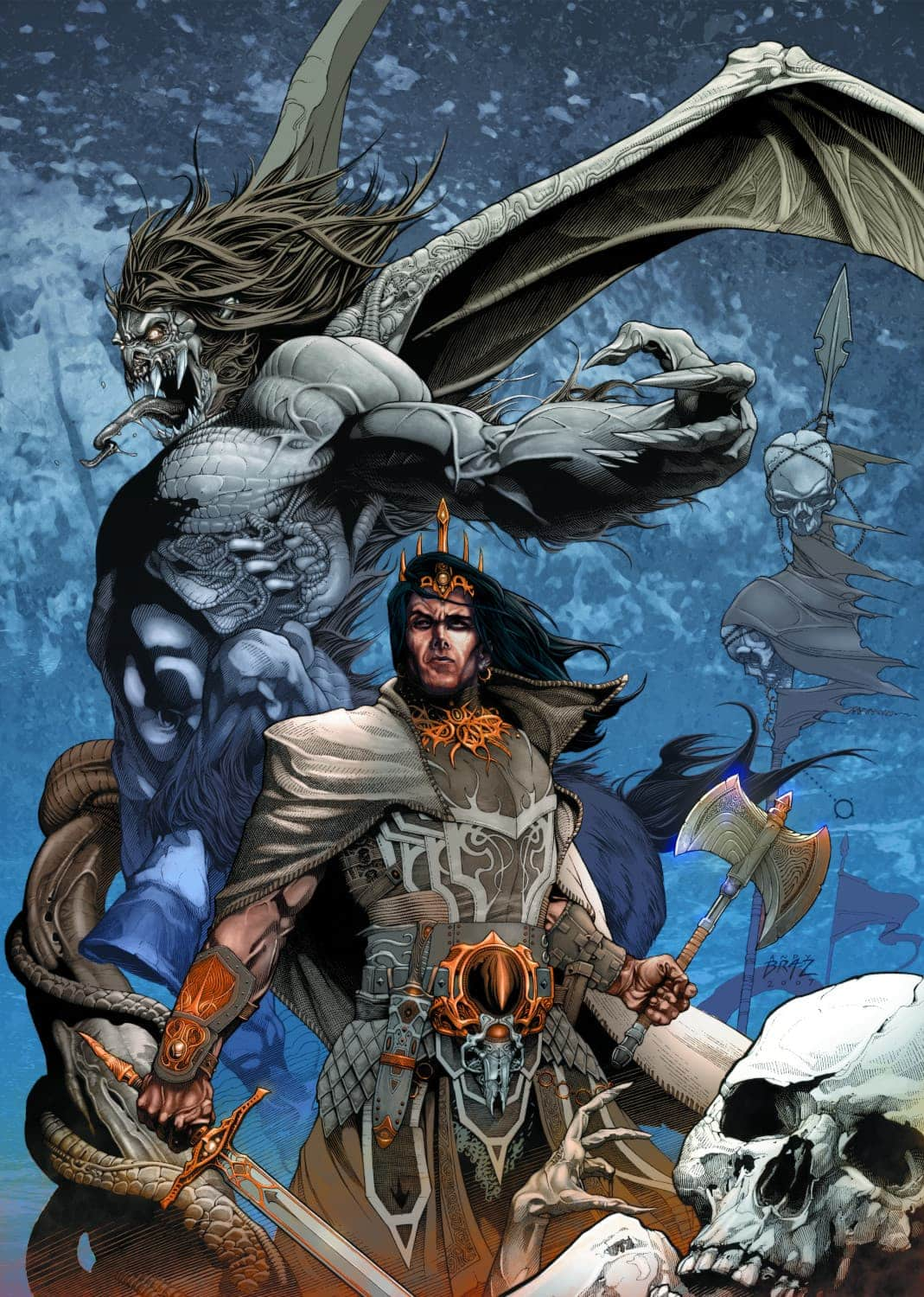
Brule is, for all intents and purposes, Kull’s anchor. He is the one with the intelligence, the plan, and the composure. He gives orders to the king. In this way, Kull of Atlantis and Brule of the Spear-Slayer are the true first dynamic duo in contemporary literature.
How the Kull of Atlantis Story “The Shadow Kingdom” Established the Modern Idea of a Dynamic Duo
“The Shadow Kingdom” is the story that invented sword and sorcery, and it opens with its hero already losing.
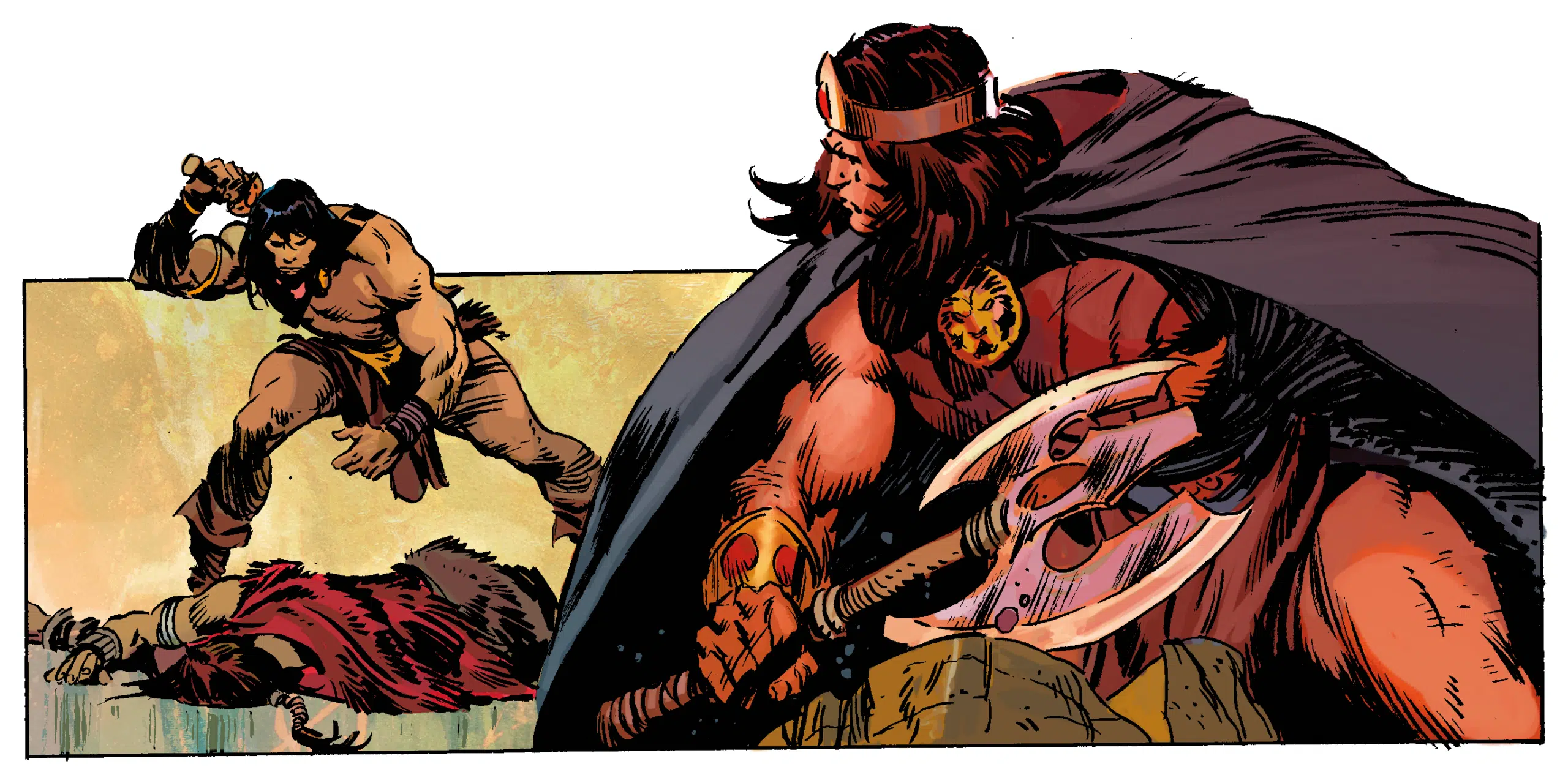
Kull of Atlantis sits on the Topaz Throne of Valusia but he has no right to it. He’s a barbarian from the sea-mountain tribes of a sunken continent, and his résumé reads like a criminal record: feral tribesman, galley slave, outlaw, gladiator, mercenary. He took the crown by killing King Borna with his own hands. The Valusian aristocracy has not forgotten.
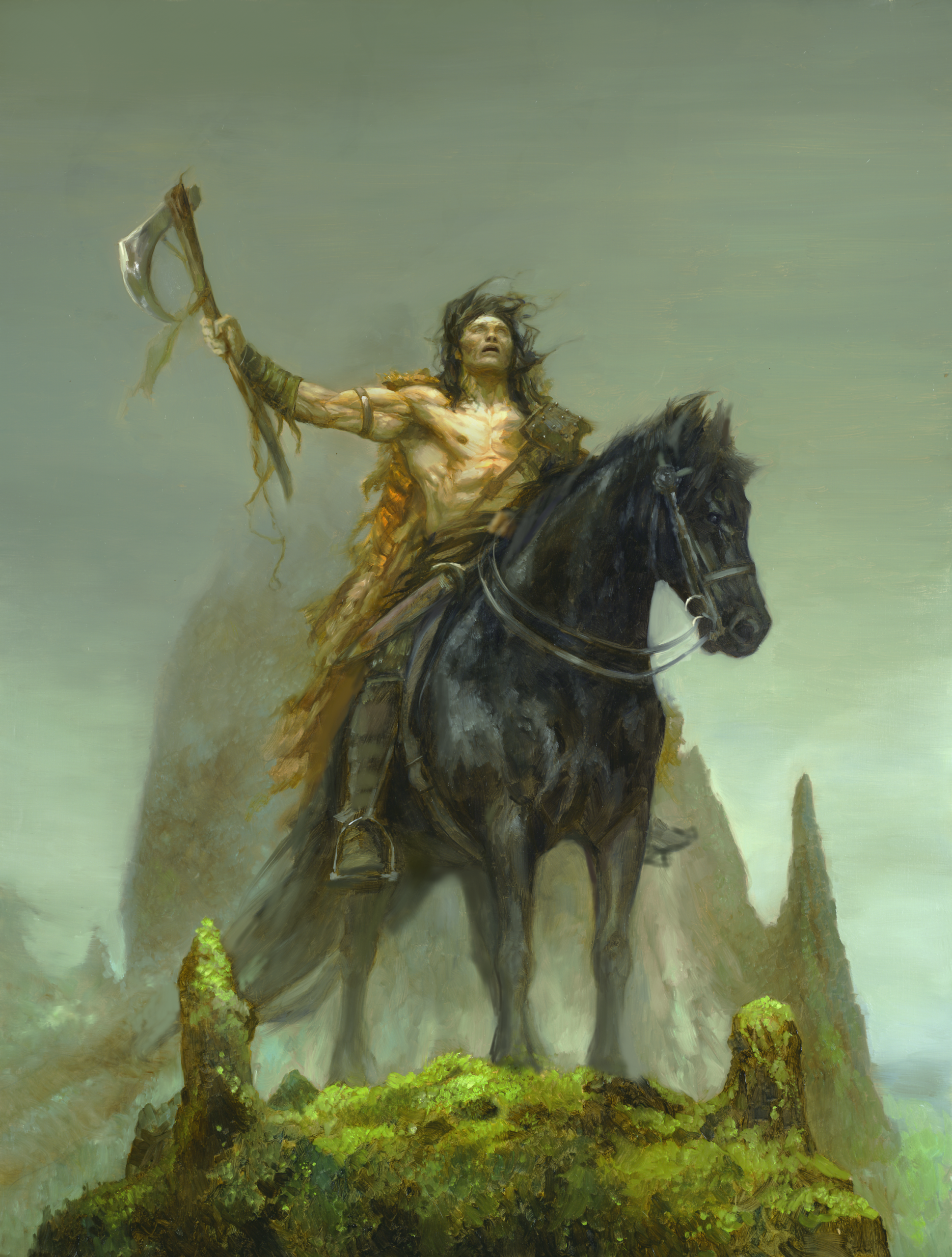
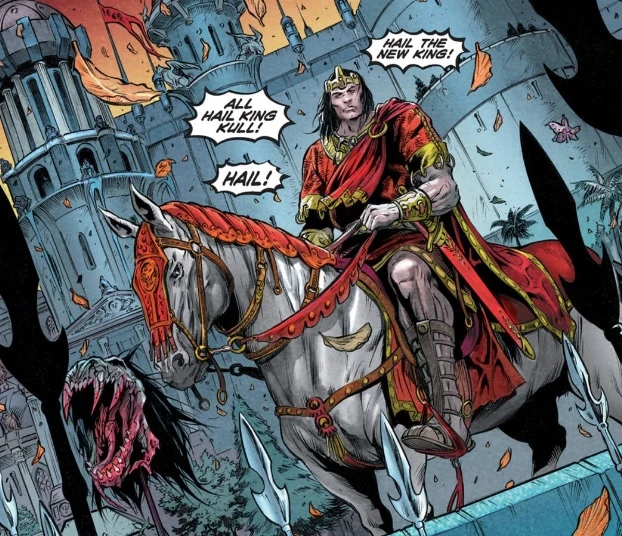
As Kull rides through the capital during a military parade, the exultant shouts of the populace are undercut by whispered contempt from the nobles: “accursed usurper from the pagan isles.” Kull holds the throne through soldiers alone, and he knows it. He finds the labyrinthine court politics of Valusia suffocating, describing the intrigues around him as a masquerade where everyone hides their real thoughts behind smooth masks. He is a king surrounded by enemies he can sense but cannot identify.
Into this isolation steps Ka-nu the Ancient, chief of the Pictish councilors and ambassador to Valusia. This alone is remarkable. Atlanteans and Picts are blood enemies whose feud is described as “older than the world.” Ka-nu approaching Kull is the equivalent of a wartime spy chief walking into enemy headquarters with an offer. He invites Kull to a private banquet at the Pictish embassy, where the “soft and paunchy” old diplomat reveals what Kull’s own intelligence has missed: a conspiracy of Valusian nobles, led by Kaanuub the Baron of Blaal, is moving against the king’s life.
Ka-nu tells Kull he is sending his most elite warrior – Brule the Spear-Slayer – to guard him, identified by a golden bracelet shaped like a winged dragon with ruby horns. Then, the Pictish ambassador stakes his own life as collateral against his warrior’s loyalty. He hands Kull a green gemstone stolen from the Temple of the Serpent, an artifact so illegal that if Kull showed it to the Valusian priests, Ka-nu would be executed for blasphemy on the spot.
However, what Brule reveals when he arrives makes the political conspiracy irrelevant.
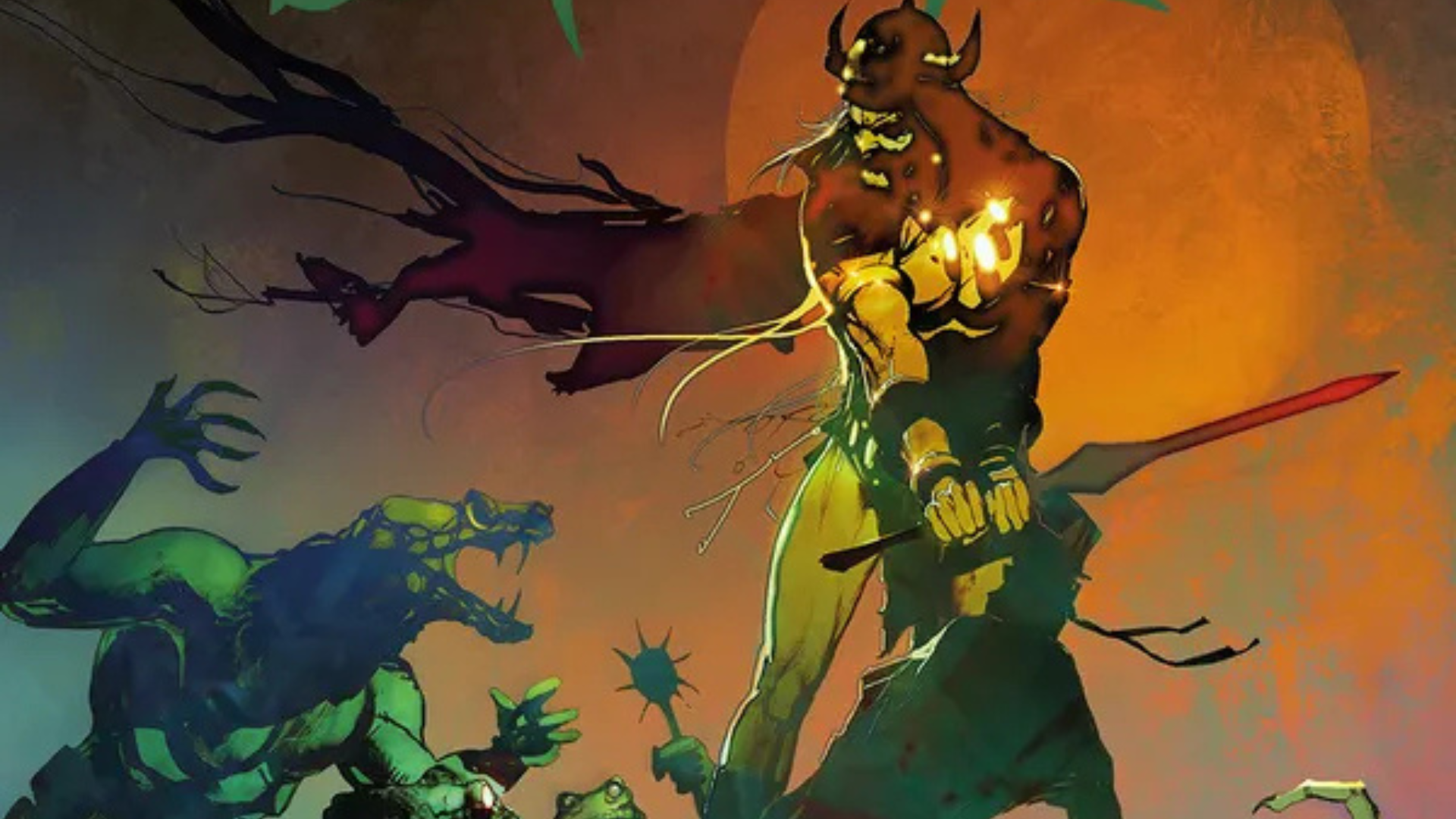
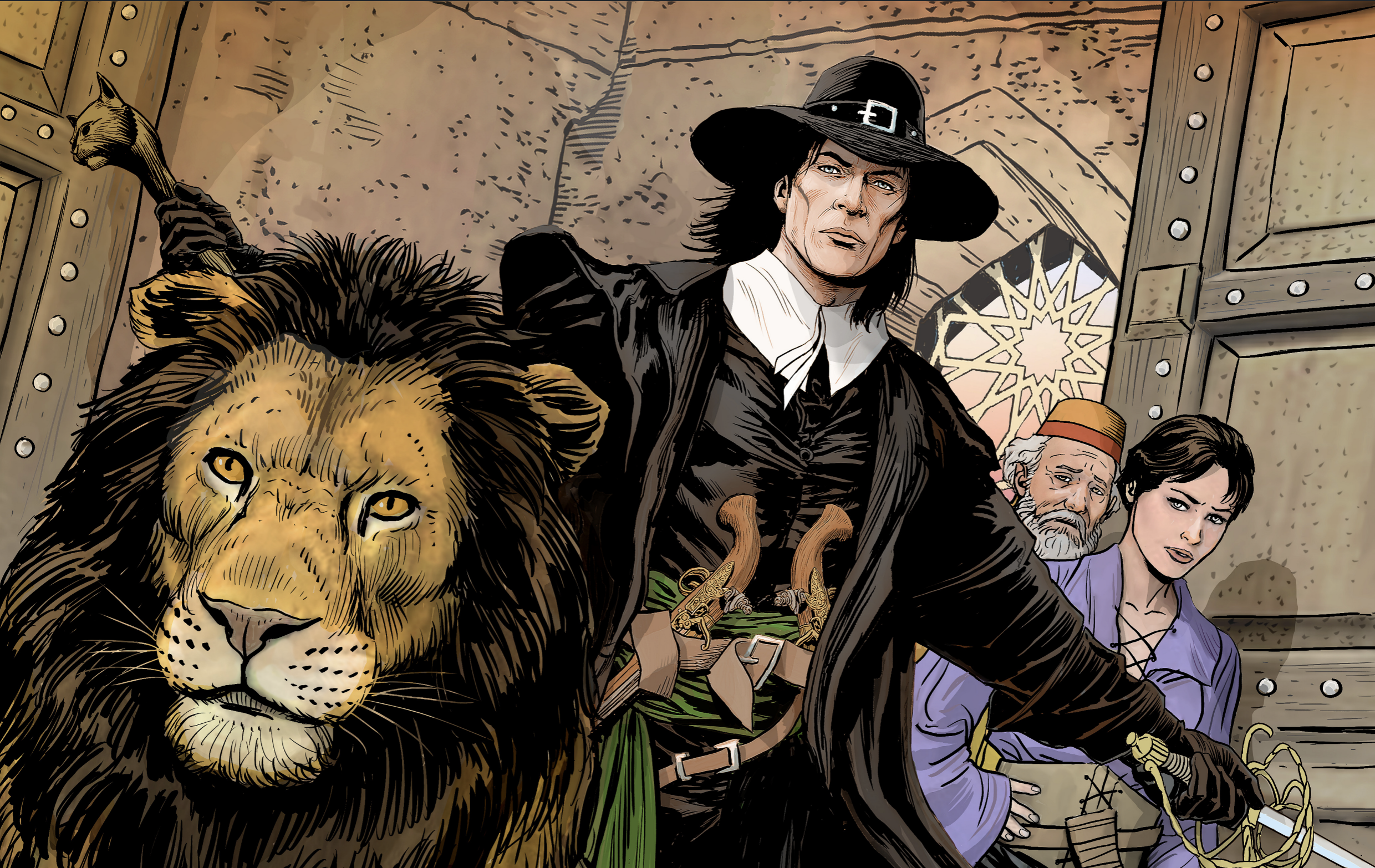
On the night following the banquet, Brule bypasses the elite palace guard and appears in Kull’s private study. He immediately reveals a hidden panel in the study wall that opens into a network of secret passages. Kull is stunned, crying out “A secret passage! And I knew nothing of it!”, and from this moment forward, Brule leads and Kull follows. Through the dusty corridors, Brule brings the king to a hidden room where eighteen of Kull’s Red Slayer guards lie unconscious and bound.
Brule then leads Kull to a peephole. The king looks out and sees the eighteen guards still at their posts. These can only be one thing: Serpent Men. The coup that Kull so anxiously feared melted before him, and what took its place was a threat far stranger, and more lethal: a species-level replacement operation that has been running, undetected, inside the halls of power for longer than human memory.
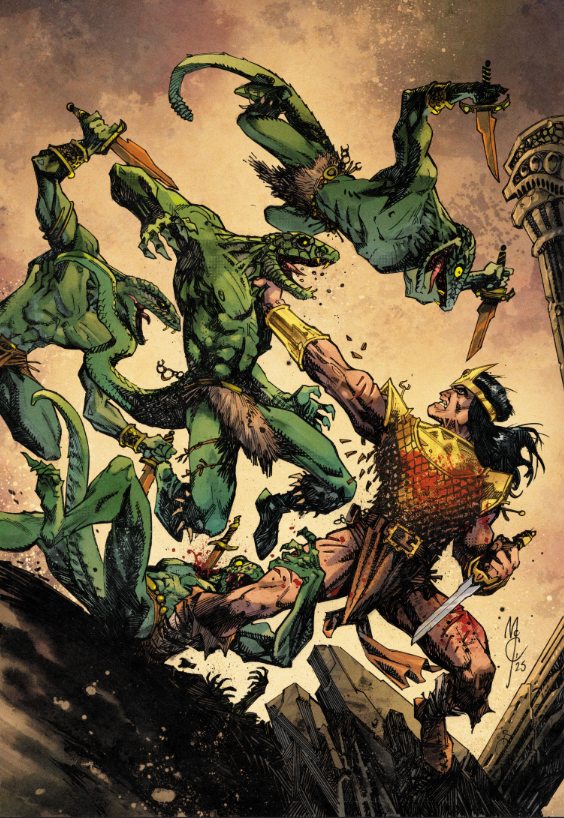
Kull’s reaction to this revelation is pure panic. He half-draws his sword and whispers about sorcery and walking dead. Brule’s reaction is to take command. When Kull shouts in anger upon discovering the secret passage, Brule hisses a single word, “Silence!”, at the king. When Brule whispers the forbidden name of the serpent that speaks, Kull clamps a hand over his mouth in terror; Brule calmly removes it, looks the monarch in the eye, and issues a direct order: “Look again, King Kull.”
When Kull admits he knows nothing of Valusia’s ancient history, Brule lectures him with undisguised contempt for human ignorance: “We are but barbarians, only infants compared to the Seven Empires. But Kull, men were not always ruled by men.” Ka-nu’s earlier instruction to the king now reads less like advice and more like a job description: “Trust Brule as you trust yourself, and do what he tells you to.”
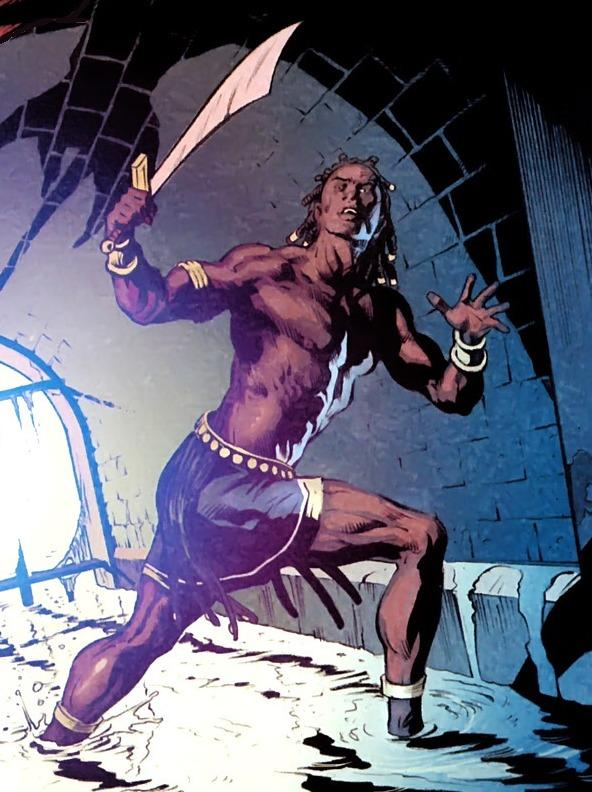
This is the foundation the rest of the story (and, arguably, the rest of the genre when dynamic duos are present) is built on. The king wears the crown. The so-called ‘underling’ has the knowledge, the composure, and the plan. In 1929, in the pages of a pulp magazine that cost a quarter, Robert E. Howard laid this groundwork. Plenty have replicated that dynamic after, but not for a long time, and rarely as well.
How Do Famous Dynamic Duos Compare to Each Other?
Every famous partnership in popular fiction is a variation on one of two templates, and the one most people assume came first actually came second.
The fictional partnership is older than genre fiction itself. Cervantes paired Don Quixote with Sancho Panza in 1605, and the template of a visionary and pragmatist, a dreamer with a doubter, has been running ever since. But the duo as a repeatable mass-market formula, a structural engine that drives genre after genre, is a modern invention. And every famous version is a variation on one of two templates, with the one most people assume came first actually coming second.
The template most readers inherit without thinking about it was set in 1887, when Arthur Conan Doyle published A Study in Scarlet. Sherlock Holmes deduces. Dr. Watson narrates, admires, and occasionally holds the revolver. The hierarchy is absolute and deliberate: Watson exists so that Holmes’s genius has a surface to reflect off of. He is not stupid, but his role in the partnership is to be impressively outmatched. Holmes without Watson is still Holmes. Watson without Holmes is a retired army doctor with a limp and a pension.
This is the blueprint that the twentieth century mass-produced. Let us return to Batman and Robin.
Dick Grayson debuted in April 1940 as an orphan taken in by Bruce Wayne. The hierarchy is structural, not incidental. Batman deduces; Robin follows. Batman commands in combat; Robin executes. The loyalty between them is genuine, but it flows upward. Robin needs Batman in a way Batman does not need Robin. Later writers complicated this when Dick Grayson eventually becomes Nightwing–an equal–but the original 1940s template is a vertical line.
Kull and Brule are not that. Brule enters “The Shadow Kingdom” as a fully formed chieftain, ambassador, and intelligence operative who possesses knowledge the king lacks. He does not learn from Kull. He teaches him. He does not defer to the crown. He gives the crown direct orders. Remove the title and the throne, and the partnership still holds. Remove Robin from a Batman story, and Batman is still Batman. Remove Brule from “The Shadow Kingdom,” and Kull is a dead man in a palace full of monsters wearing human faces.
The sharper comparison is the Lone Ranger and Tonto. Tonto debuted in February 1933 on Detroit radio station WXYZ, created simply because writers needed someone for the Lone Ranger to vocalize his thoughts to. The character arrived pre-subordinated. Linguistically, Tonto was locked into pidgin English to signal intellectual inferiority. Narratively, his original 1938 backstory positioned him in permanent debt to the white hero who rescued him. In terms of agency, Tonto carried out the Masked Man’s plans without understanding them.
Howard published “The Shadow Kingdom” four years before Tonto existed. A 1929 pulp reader encountering a character described as a Pictish savage from an indigenous warrior tribe would have expected exactly the archetype Tonto later embodied: crude speech, reflexive obedience, intellectual limitation. What they got instead was Brule speaking in the cultured court phrases of a highly polished race, commanding a retinue of a hundred elite mounted warriors, and entering the story purely because he possesses intelligence the protagonist desperately needs.
The writers who followed Howard understood what he’d built, even if the wider culture forgot. Fritz Leiber’s Fafhrd and the Gray Mouser first appeared in August 1939 in the pulp magazine Unknown, a full decade after Kull and Brule. The structural parallels are not subtle. Fafhrd is a towering barbarian from the frozen north while the Mouser is a diminutive, cynical former wizard’s apprentice from the urban south. Different cultures, complementary skills, zero hierarchy, complete mutual respect. Leiber didn’t hide his debt to Howard. In 1961, he coined the term “sword-and-sorcery” itself and explicitly credited Howard as the genre’s creator, citing the Kull and Conan stories as the foundational texts that inspired his own work.
Tolkien also built a version of the same dynamic in 1954 with Legolas and Gimli. Through them, Elf and Dwarf overcame an ancestral hatred stretching back to the First Age, with their bond cemented in blood at Helm’s Deep. The formula migrated from page to screen and never stopped replicating, from Kirk and Spock across a Federation bridge, to Han Solo and Chewbacca across a smuggler’s cockpit. No matter the manifestation, the underlying architecture remained what Howard laid down: different worlds, mutual competence, partnership forged because the threat was bigger than the history between them.
Another comparison earns its place. In John Carpenter’s Big Trouble in Little China (1986), Wang Chi is the character with the stakes and the skills to do something about it. Jack Burton, played by Kurt Russell, is a truck driver with a big mouth and no abilities to back it up. In the film’s most telling scene, Burton fires his gun into the air before the final battle in a display of machismo. The bullet dislodges a chunk of stone ceiling that knocks him unconscious, and he misses the entire fight.
Carpenter said on the DVD commentary that he directed Russell to play Burton as a blowhard who thinks he’s John Wayne, a sort of sidekick convinced he’s the hero. Now go back to “The Shadow Kingdom.” Kull wears the crown and carries the sword. Brule has the intelligence, the access, the composure, and the plan. The difference is that Howard plays the dynamic straight which makes it more striking.
The Green Hornet and Kato belong in the same lineage. When the radio serial debuted in 1936, Kato was a valet. When Bruce Lee played him on television in 1966, he became the most dangerous person on screen, a martial artist so visibly superior to the title character that audiences in Hong Kong marketed the show under Lee’s name instead. The Hornet wore the mask. Kato did the work. Carpenter said the quiet part loud with Jack Burton. Lee said it louder with Kato. Howard said it first with Brule.
What Made the Kull and Brule Partnership Special?
Most fictional partnerships cost the characters nothing socially, whereas Kull and Brule’s costs them everything within their world.
Kull is already an outsider on the Valusian throne, a barbarian usurper the aristocracy openly despises. By allying with the Picts – enemies of both his adopted kingdom and his own ancestral people – he burns every bridge he has left. Batman trusting Robin risks nothing. Kull trusting Brule is a political, cultural, and personal gamble with no safety net. Howard understood that the partnerships worth writing about are the ones where the alliance itself is the dangerous act.
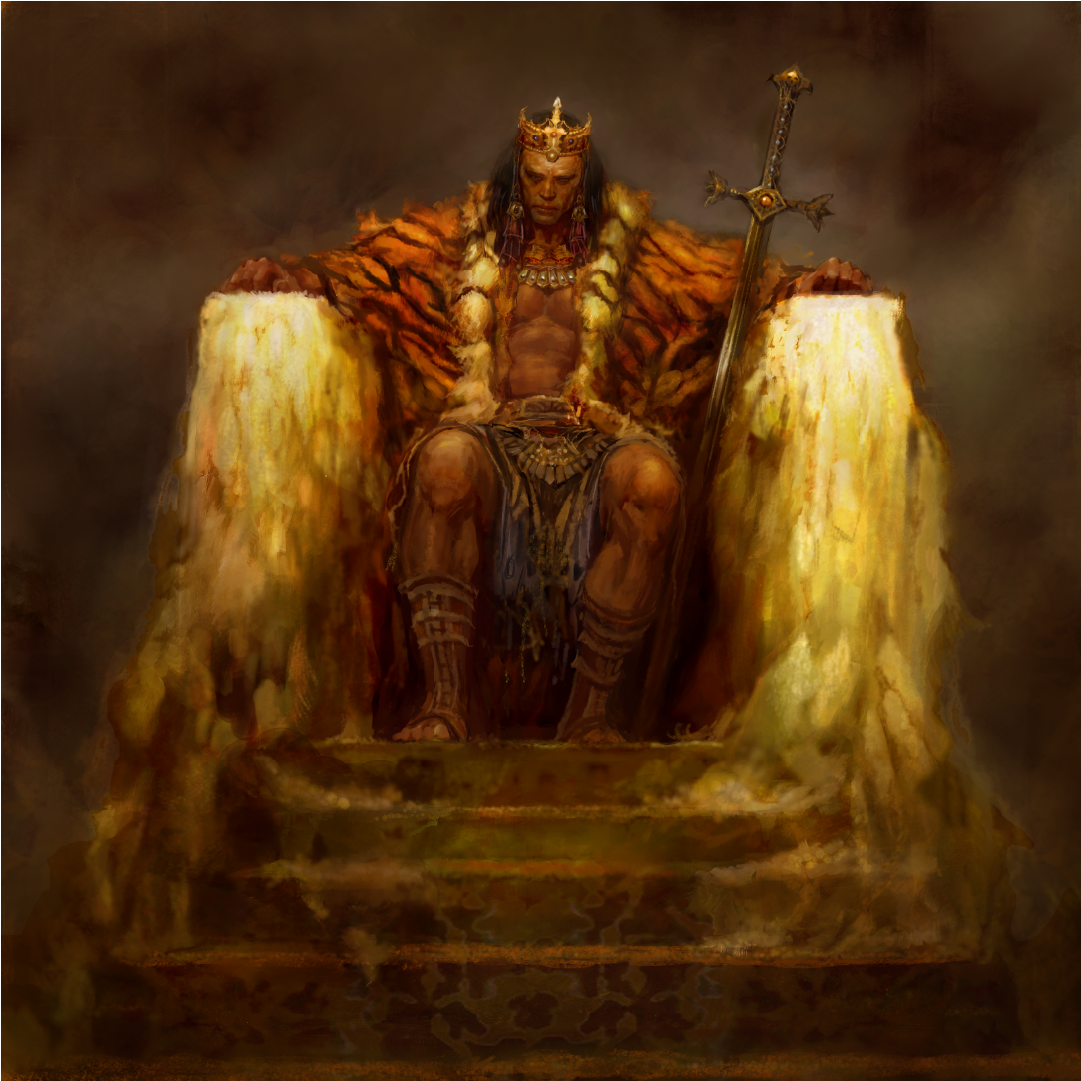
He also understood the kind of threat that forces one. The Serpent Men want more than Kull’s throne: they want his face. They kill leaders, assume their identities through shapeshifting sorcery, and govern from inside the stolen body. You cannot fight that threat alone, because you cannot trust your own perceptions alone. You need someone outside the compromised system, someone with no reason to help you except that the alternative is worse for both of you. The Serpent Men make every prior enmity between Atlantean and Pict irrelevant, and that irrelevance is what makes the bond real.
This is also why Conan doesn’t have a Brule. Conan allies with capable people like Valeria, Balthus, and Prospero, but always temporarily. He doesn’t need a permanent partner because he doesn’t doubt. “I live, I burn with life, I love, I slay, and I am content.” Kull is the opposite: introspective, melancholic, plagued by questions about which version of himself is real.
Without Brule as an anchor, Kull’s philosophical instability spirals into madness. Their dynamic duo format is, to put it lightly, a load-bearing architecture.
Where Should You Start Reading the Kull Stories?
The place to begin is Kull: Exile of Atlantis, published by Del Rey Books. Researched and restored by Howard scholar Patrice Louinet, the Del Rey title gives you “The Shadow Kingdom,” “The Mirrors of Tuzun Thune,” “Kings of the Night,” nine previously unpublished stories and fragments, and the restored text of “By This Axe I Rule!”, the story Howard later rewrote into the first Conan tale, “The Phoenix on the Sword.” It’s available in trade paperback, hardcover, and digital.
Start there, and then keep going, because the story isn’t over.
At San Diego Comic-Con 2025, Heroic Signatures and Titan Comics announced that Kull is getting his own full comic series in 2027. The first dynamic duo in sword and sorcery started in a collapsing palace, trusting across enemy lines, with stolen faces in every hallway. In 2027, they come back. If you’ve never met them, now you know where to start. If you have, you already know why this matters.