






Most people meet Thulsa Doom the same way.
He is the calm, towering figure at the center of John Milius’s 1982 Conan the Barbarian, played by James Earl Jones in a performance that has outlived almost everything else about the film in public memory. He runs a snake cult from a place the movie calls the Mountain of Power, where thousands of followers come to hear him preach.
In the scene people remember most, he stands on a high ledge with the captured Conan and explains, very calmly, that the sword Conan has chased his whole life is worthless next to the will of the person holding it. To prove it, he tells one of his own followers to step off the ledge, and she does. Then he turns back to Conan and asks, “What is steel compared to the hand that wields it?” A moment later he condemns Conan to be crucified on a dead tree in the desert and leaves him there to die.
It is a genuinely great villain, and the film earns much of its reputation on his presence. But almost everything that makes him unforgettable was added to the character long after Robert E. Howard, the man who supposedly created him, was already dead. The name itself is the one loose thread that, once you pull it, leads away from Conan entirely.
Thulsa Doom belongs to the King of Valusia, Exile of Atlantis
Thulsa Doom is older than Conan, and he was never a Conan villain at all. Howard wrote him for an earlier hero named Kull, the exiled Atlantean who became king of the ancient empire of Valusia. In every story Howard himself finished, Thulsa Doom belongs to Kull’s world.
Curiously, he also barely exists there. The character first appeared in a single story that Howard began under the title “Delcardes’ Cat.” Midway through drafting, Howard changed direction and introduced a skull-faced sorcerer he named Thulsa Doom, then retitled the story “The Cat and the Skull” to fit him.
Then, the character vanished for forty years. Howard submitted the story to Weird Tales in 1928, and the editor, Farnsworth Wright, rejected it. So, it sat unpublished in Howard’s files until 1967, long after his death in 1936, read by no one in the meantime. Seeing as the original Thulsa Doom had almost no readers and almost no fixed identity, he was left wide open for anyone who liked the name to rebuild him from scratch. The figure you remember is not the figure Howard wrote, and that gap is the first real sign that the trail runs back toward Kull.
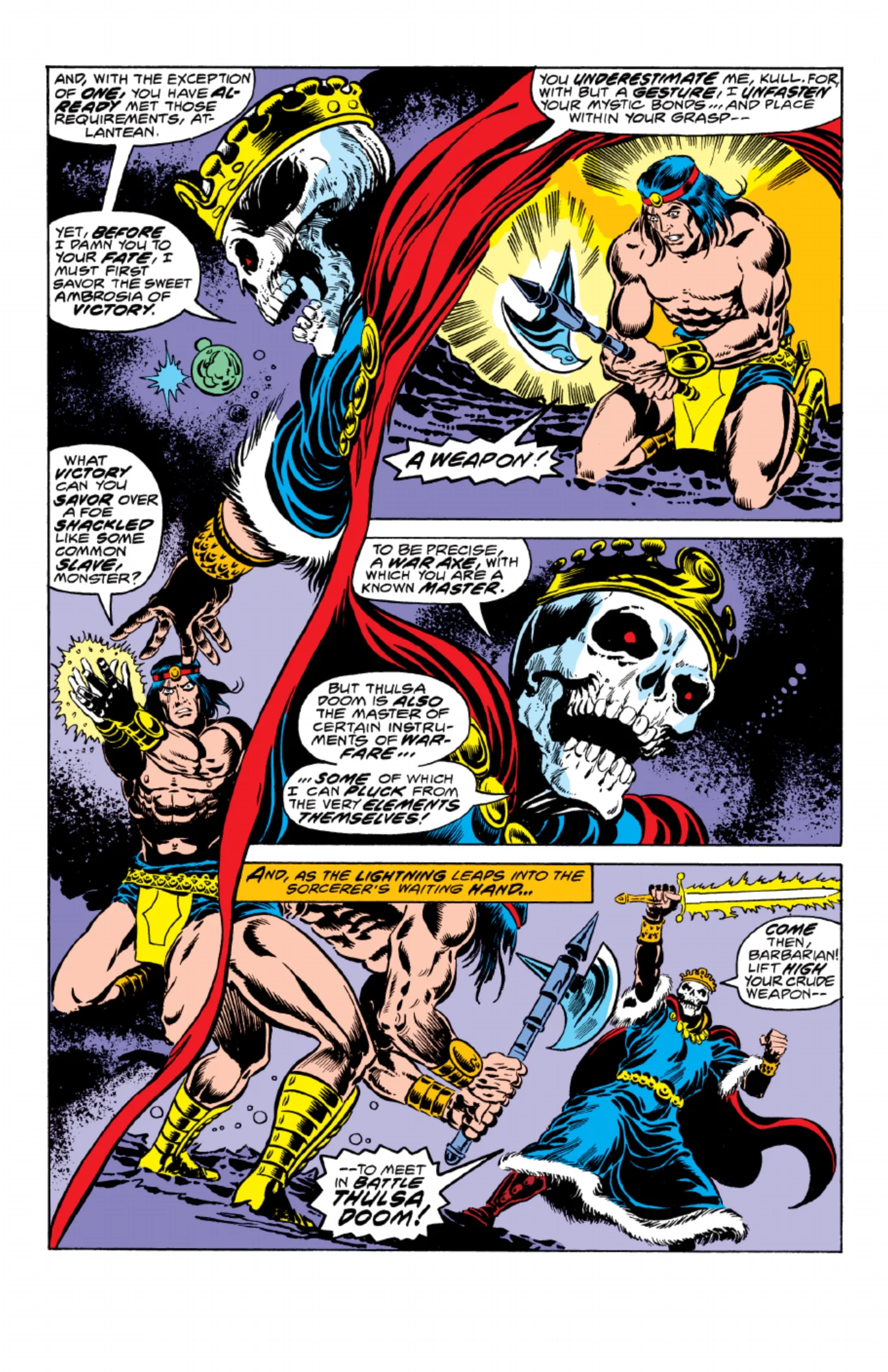
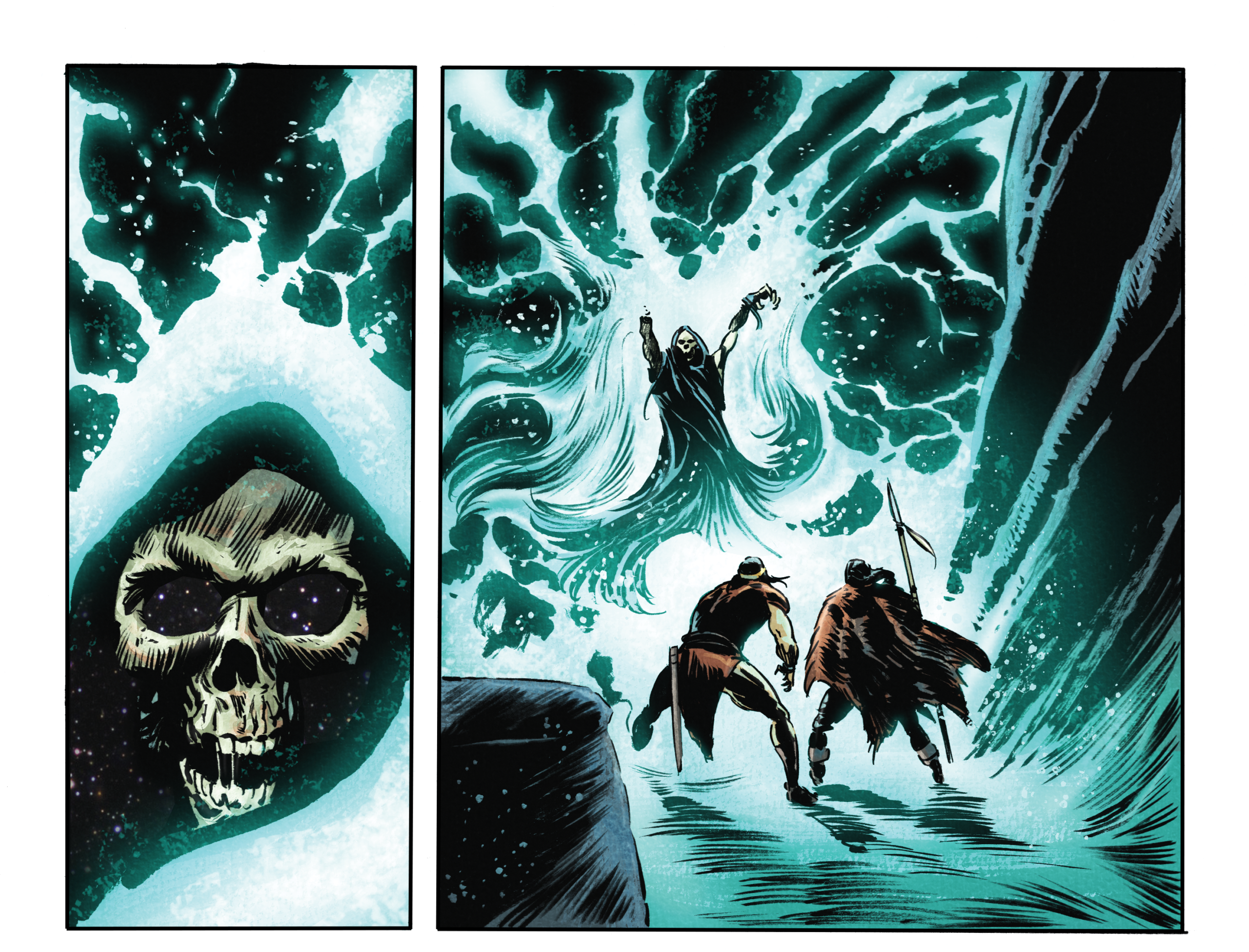
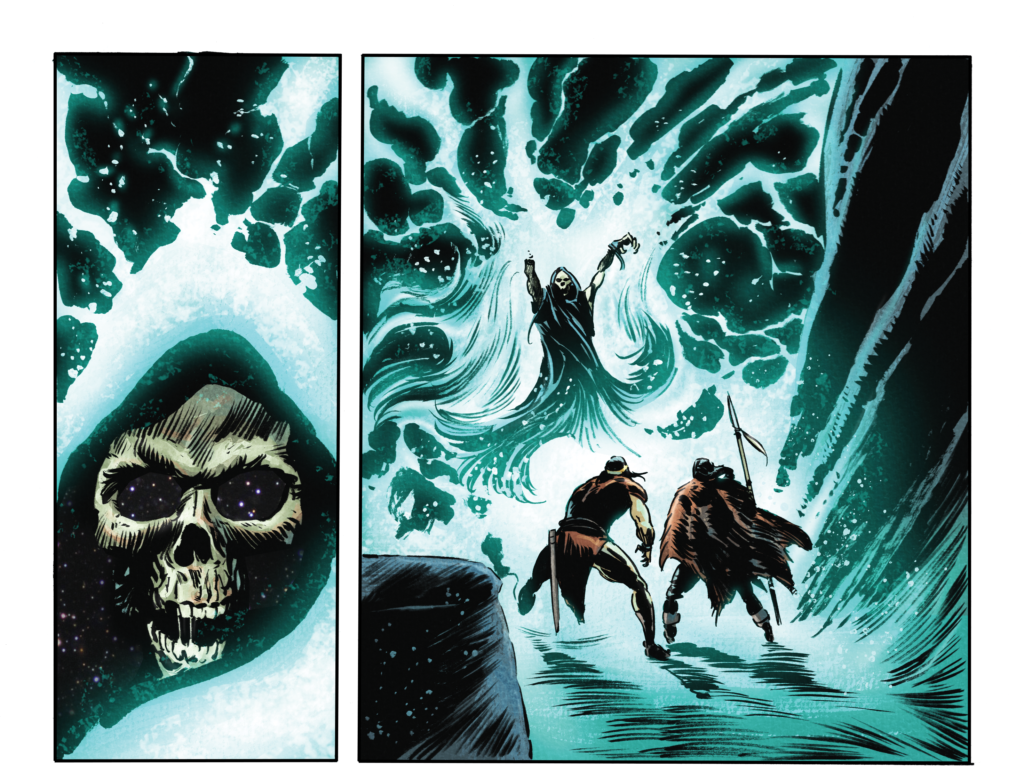
The Thulsa Doom of Howard’s actual text would be unrecognizable to a movie audience. In the only story Howard finished with him, he works entirely through disguise and deception. He is a gaunt figure who keeps his face hidden, and when he finally reveals it, the story describes “a bare white skull” with fire burning in the eye sockets. He conceals himself behind the identity of a servant and uses a talking cat to lure Kull toward a deadly trap. When one of Kull’s men runs him through with a sword, he is barely troubled, claiming the wound gives him only a faint chill before he escapes through a doorway into some other world. What the movie treats as the character’s entire identity is missing from Howard’s source completely, which is the clearest evidence that the movie’s villain was assembled somewhere other than these Kull stories.
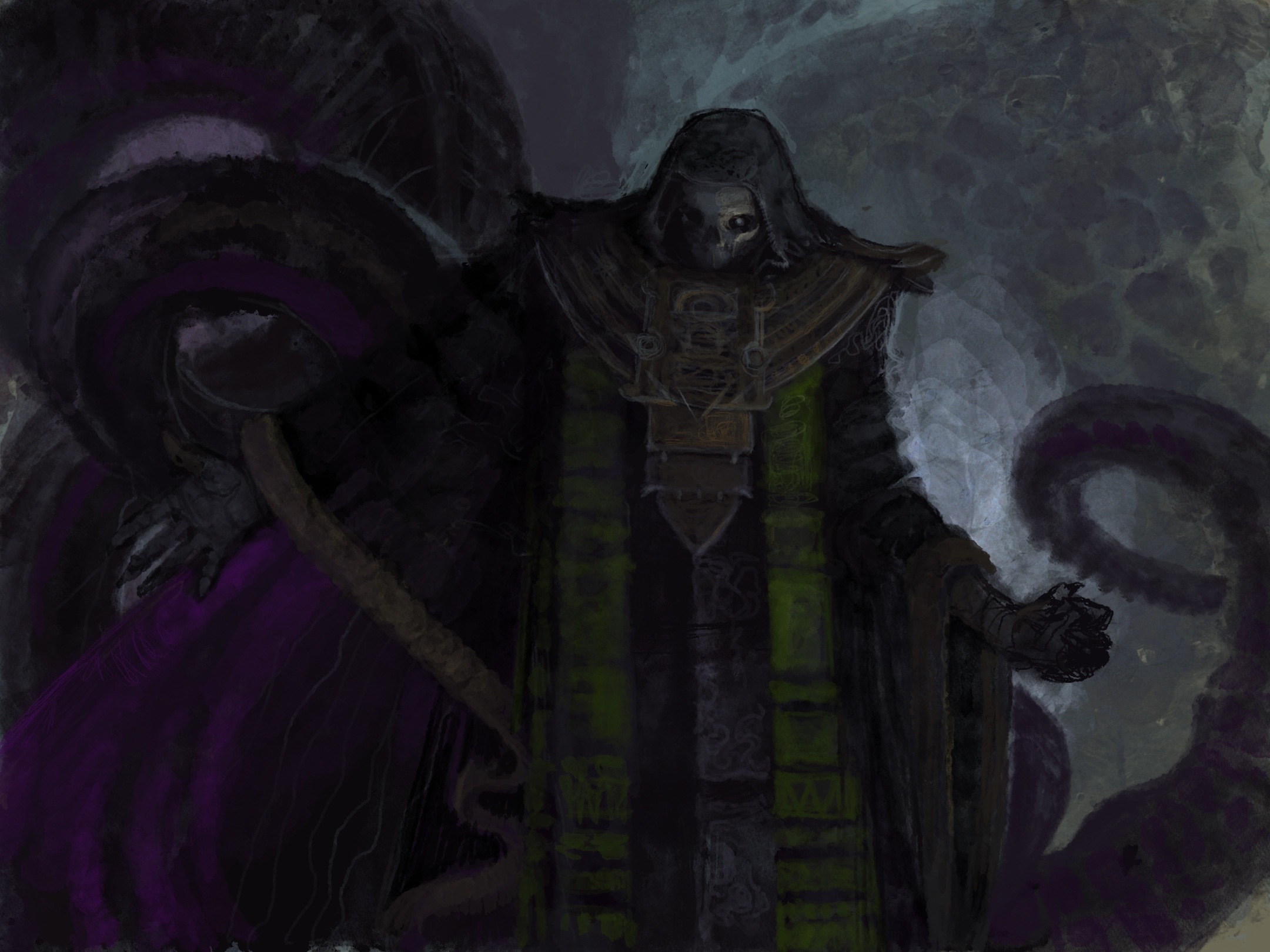
The villain you know as Thulsa Doom as played by James Earl Jones was built in pieces
If the original was that thin, the obvious question is where the rest of him came from. The answer is that the Thulsa Doom of the 1982 movie Conan the Barbarian was assembled, piece by piece, across more than fifty years, by several different hands.
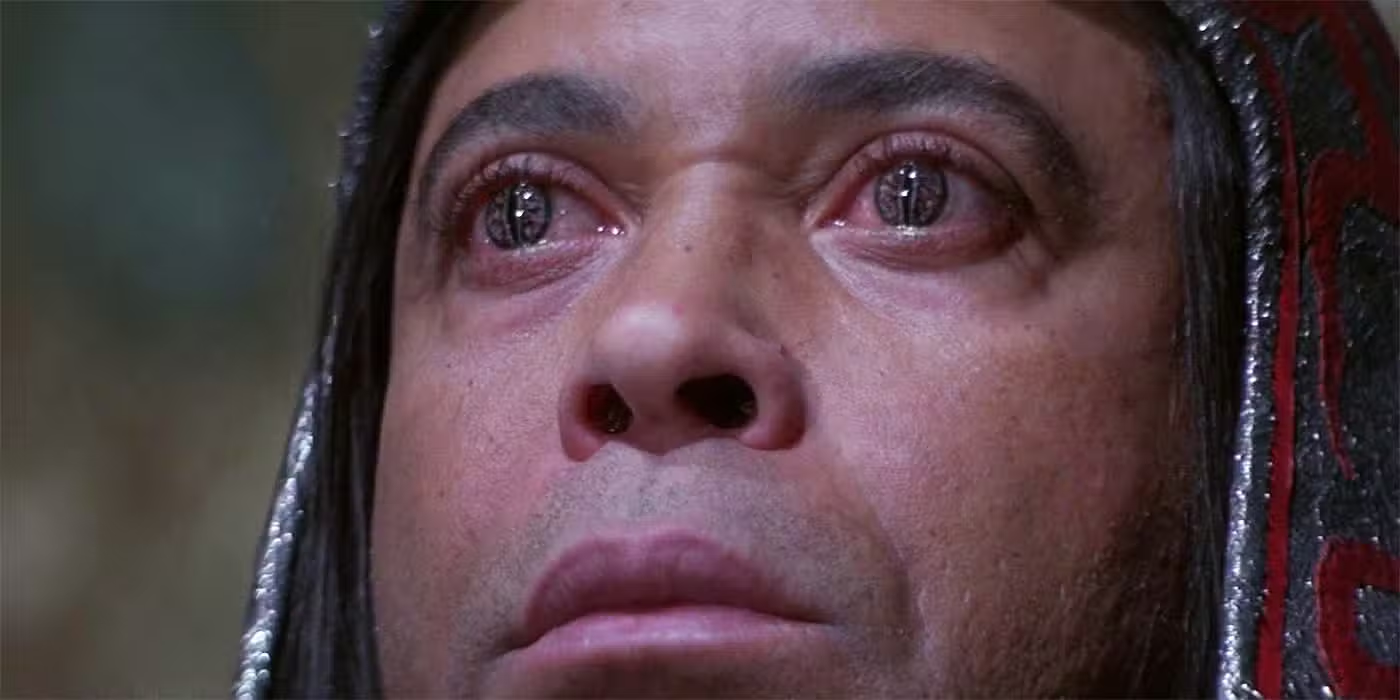
Start with the snake cult, since it defines the movie character. Worship of the serpent god Set is not part of Kull’s world or the original Thulsa Doom story. It comes from Conan’s world, where Set’s most famous follower is a Stygian sorcerer named Thoth-Amon, the villain of the very first published Conan story. What James Earl Jones actually plays is much closer to Thoth-Amon. A living human sorcerer who leads a snake cult is essentially a portrait of Conan’s serpent-priest enemy, wearing the name of a villain Howard had built for Kull.
The piece that joined those two worlds together was added in comics. In 1972, the writer Roy Thomas brought Thulsa Doom into Marvel’s Conan and Kull titles and began expanding him well past Howard’s brief sketch. Thomas tied him directly to Set and to an ancient race called the Serpent Men, gave him a temple and a following, and turned a fleeting illusionist into a sorcerer who commands a cult. The version of Thulsa Doom who leads worshippers, rather than working alone in the dark, was largely built in those comics, a full decade before the film.
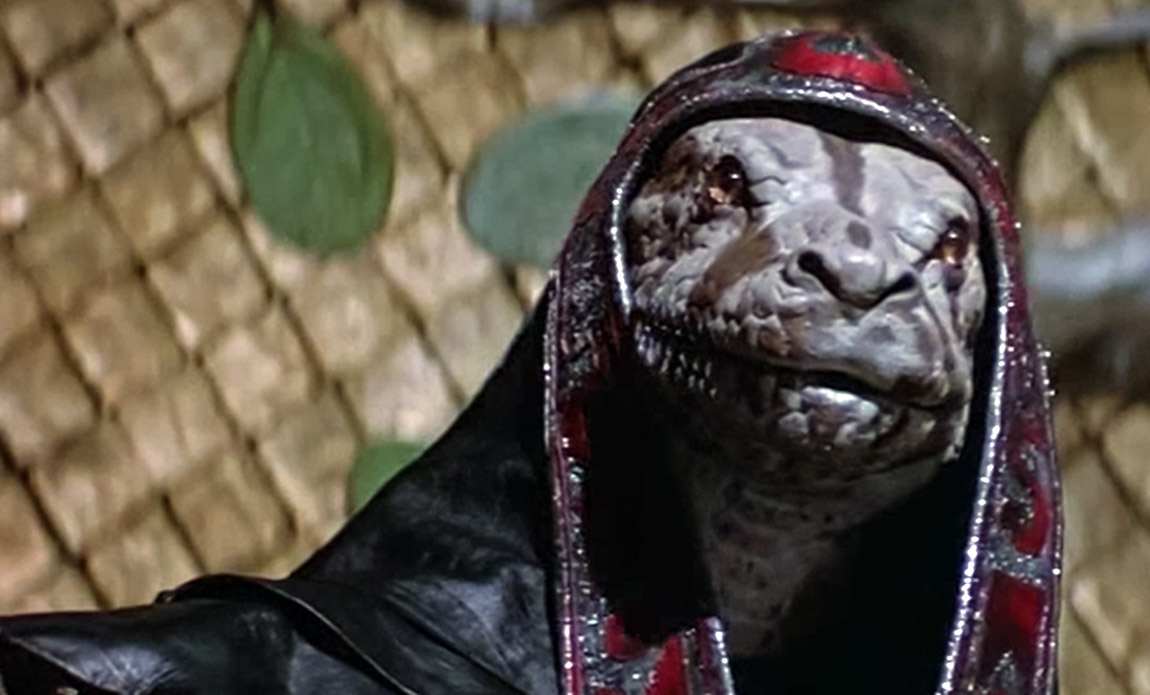
The last layer is the one most people respond to, and it came from the director. Early scripts by Oliver Stone imagined Doom as a supernatural demon leading armies of mutants. Milius threw that out and rebuilt the character as a calm, magnetic cult leader. He has said plainly in interviews that he modeled him on the real cult figures of the 1970s, naming Jim Jones of the Peoples Temple and Charles Manson. That decision is why the villain still feels so unsettling and so modern. His power is the ordinary, recognizable power of a man who can talk people into dying for him.
Which leaves the name. If the movie’s villain behaves like Thoth-Amon and is modeled on Jim Jones, why call him Thulsa Doom at all? The unglamorous answer, from the filmmakers themselves, is that they simply liked how it sounded. Milius and Stone felt “Thulsa Doom” was authentically Howardesque and hit harder than “Thoth-Amon.” The most iconic villain name in fantasy film was chosen, essentially, for its music. And that borrowed name is the only part of the movie character that reaches all the way back to where Howard actually started, which is a story about Kull.
The king at the bottom of the name
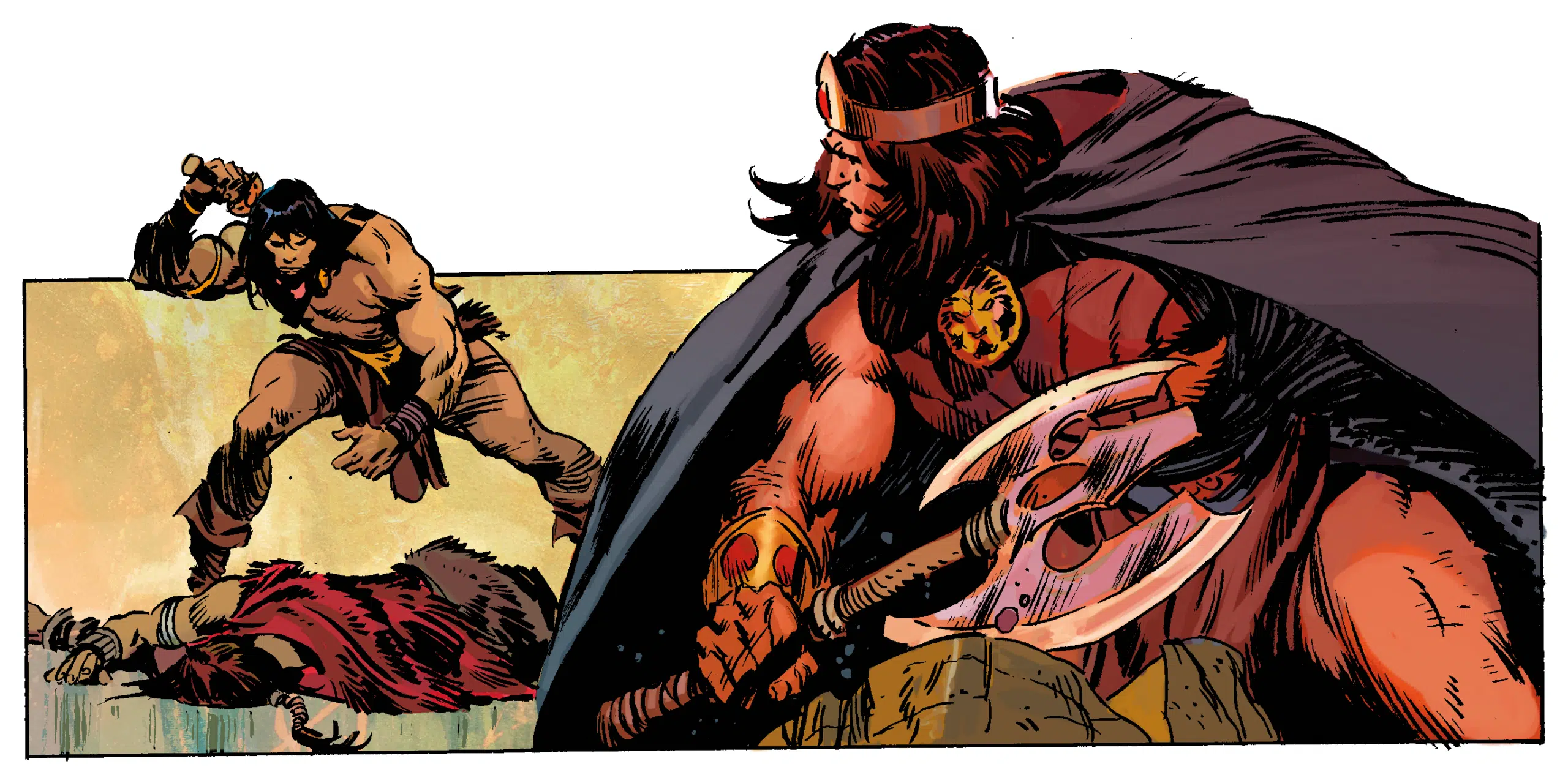
So who is Kull? He came out of Howard’s imagination several years before Conan did. He was born in Atlantis, driven into exile young, and survived as a slave and then a gladiator before rising through a foreign army and seizing the throne of Valusia, killing its tyrant with his own axe. The link between him and the more famous barbarian is that the first Conan story Howard ever published was a reworked version of a rejected Kull story. Conan was built, quite literally, on a Kull foundation.
The story that introduces his world best is “The Shadow Kingdom,” and it shares something with the movie that brought you here. Its primary threat is an ancient race called the Serpent Men can take on the exact appearance of ordinary people, and they have quietly infiltrated Kull’s court, murdering officials and replacing them with copies, working their way toward replacing the king himself. Kull rules a palace where he cannot be certain that the man across the table is really a man. The dread of a trusted face that hides an enemy is the same engine that powers the snake cult in the film.
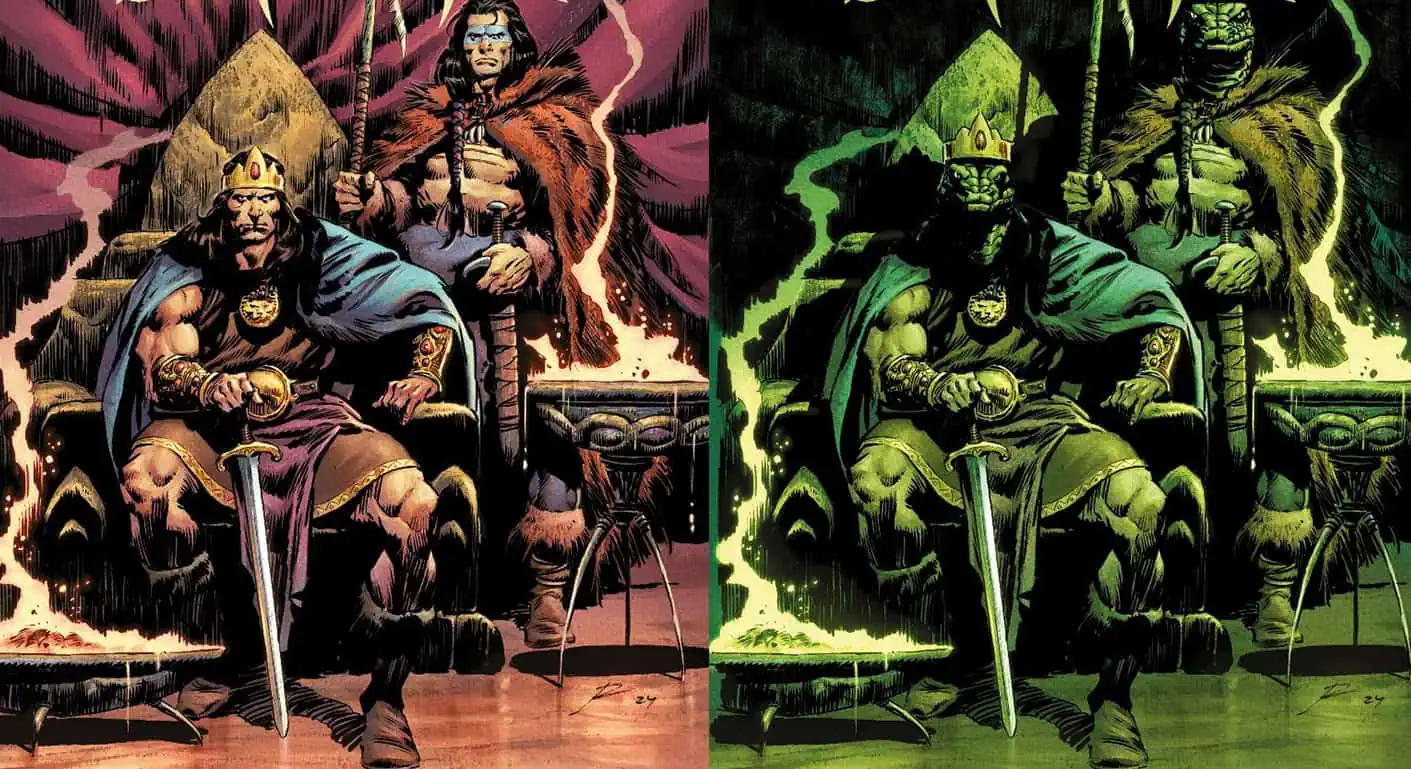
The quality that truly sets Kull apart shows up in a stranger story still, “The Mirrors of Tuzun Thune.” Here Kull is fighting no one. He is a king worn down by a weariness he cannot name, and he visits a wizard who keeps a room of enchanted mirrors. Staring into them day after day, Kull becomes convinced that his reflection might be a real and separate self living in a world behind the glass, and he begins, literally, to fade into it, neglecting his kingdom while he tries to work out which version of himself is the true one. He is pulled back only when his friend Brule shatters the mirrors, and he is never quite the same afterward, left to brood on what the story calls “worlds beyond worlds.”
It is tales like this that give scholars reason to treat Kull as a distinct kind of character rather than a rough draft of Conan. The people who have studied Howard most closely, among them Patrice Louinet, Steve Tompkins, and Rusty Burke, keep returning to the same description of Kull as “a thinking man’s barbarian,” a brooding, introspective king preoccupied with questions about reality and his own rule. If the Conan the Barbarian movie villain sold you on a villain with a strange, searching intelligence behind his cruelty, the real irony is that the intelligence belongs, by inheritance, to the hero Thulsa Doom was originally invented to oppose.
Where to actually start reading Kull if you want to explore more villains like Thulsa Doom
“The Shadow Kingdom,” the story of the shape-shifting Serpent Men, is the right entry point, and not only because of where it sits in Kull’s story. It gives you the same pleasure the movie did, the slow dread of an enemy wearing a friendly face, so you are not starting cold. It also happens to be one of the most important stories in the genre’s entire history. Scholars widely regard “The Shadow Kingdom,” published in 1929, as the first true work of sword and sorcery, the story that every later tale of muscled heroes and dark magic descends from. Reading it puts you at the very source of the form.
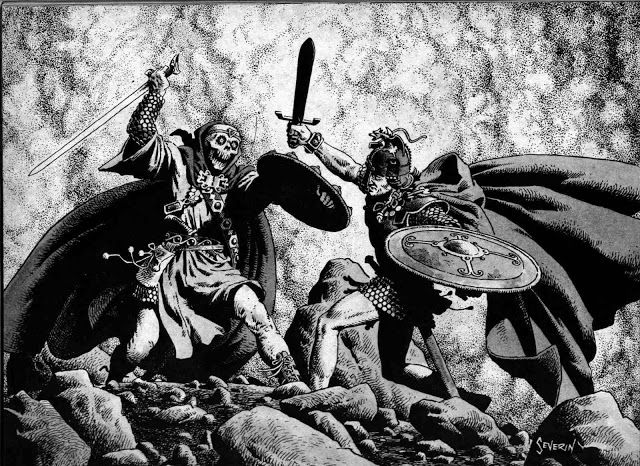
If it takes hold, the next step is “The Mirrors of Tuzun Thune,” the quieter and far stranger story of the king who nearly disappeared into a mirror. That one shows you the side of Kull no film has ever tried to capture.
You came here for Thulsa Doom. The thread he hangs from leads straight to Kull, and the stories are waiting at the other end of it and, luckily for you, lots of them are free since they’re public domain – so there’s no better time than now to start!