





Solomon Kane is back.
Fifteen years after his last solo series, Robert E. Howard’s Puritan avenger returns in The Lion Errant, a new Titan Comics and Heroic Signatures series written and drawn by Patch Zircher.
This time, Kane’s wanderings carry him from East Africa to Mughal-era India, a setting rarely explored in sword and sorcery, and one Howard himself left tantalizingly open.
We spoke with Zircher about bringing Kane back to comics and building a new adventure out of the corners of Howard’s world.
The most influential Howard character you’ve never read
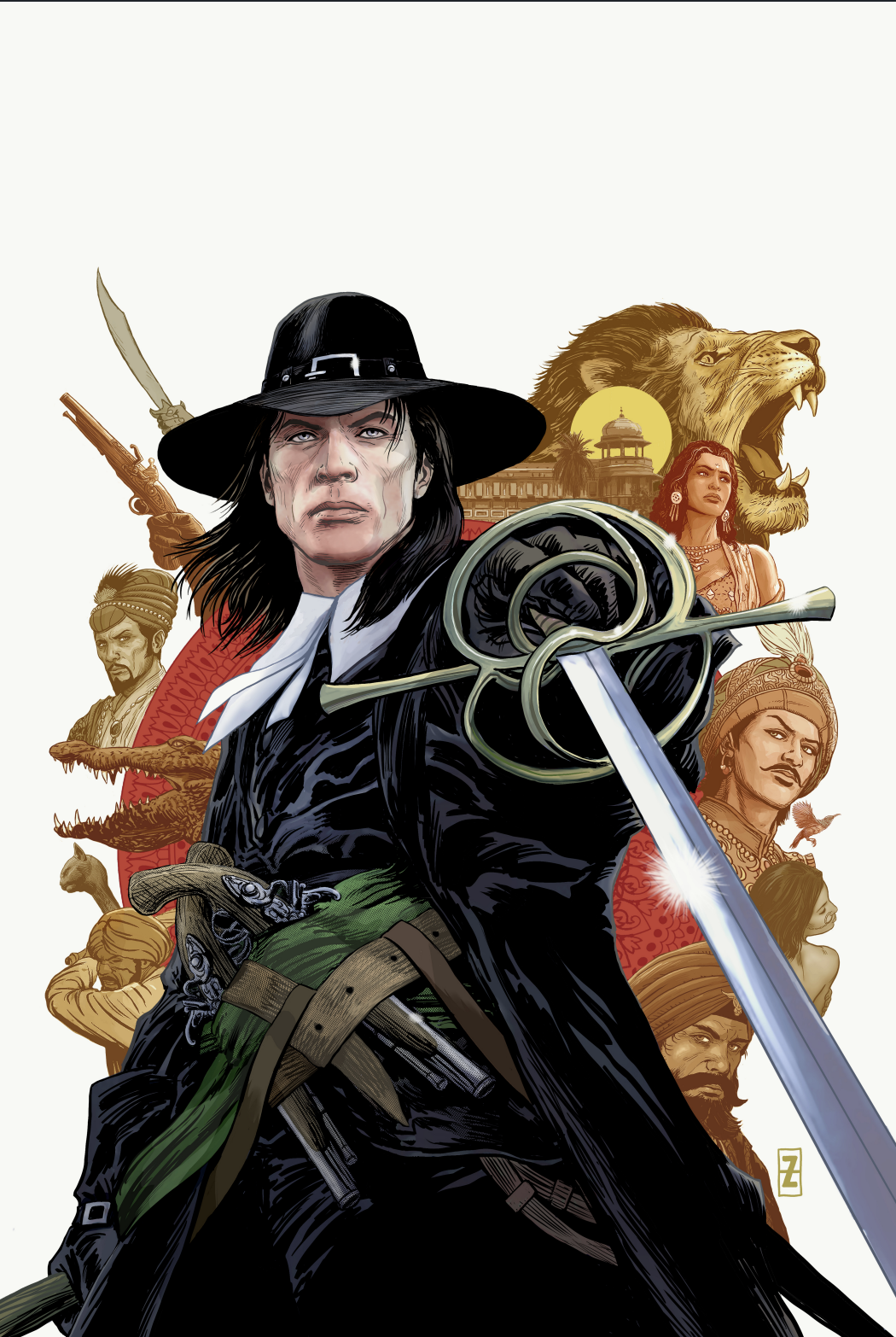
For anyone meeting him fresh, Solomon Kane is Robert E. Howard’s wandering Puritan avenger: black-clad, armed with a rapier and pistols, and seemingly incapable of encountering evil without deciding it has become his problem.
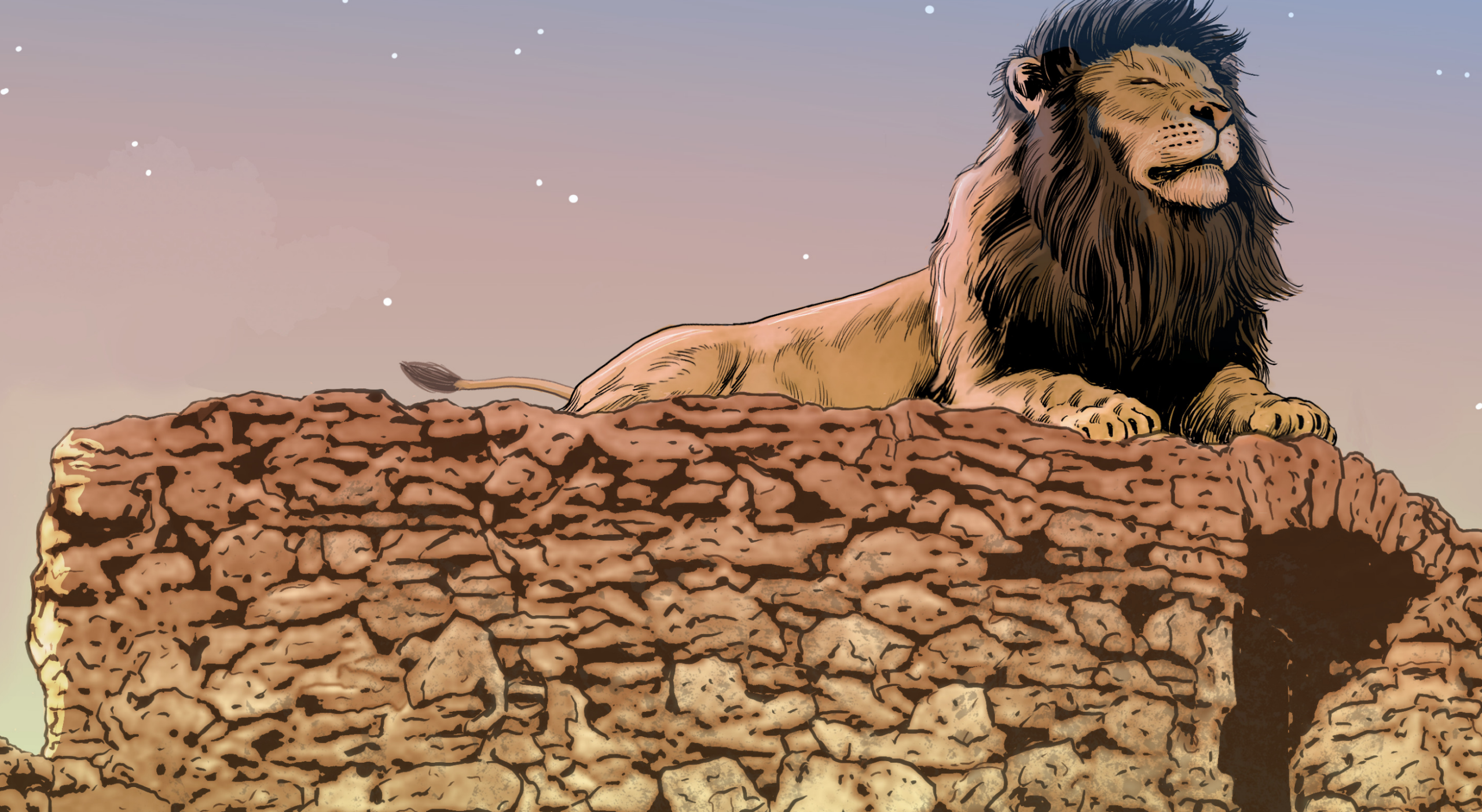
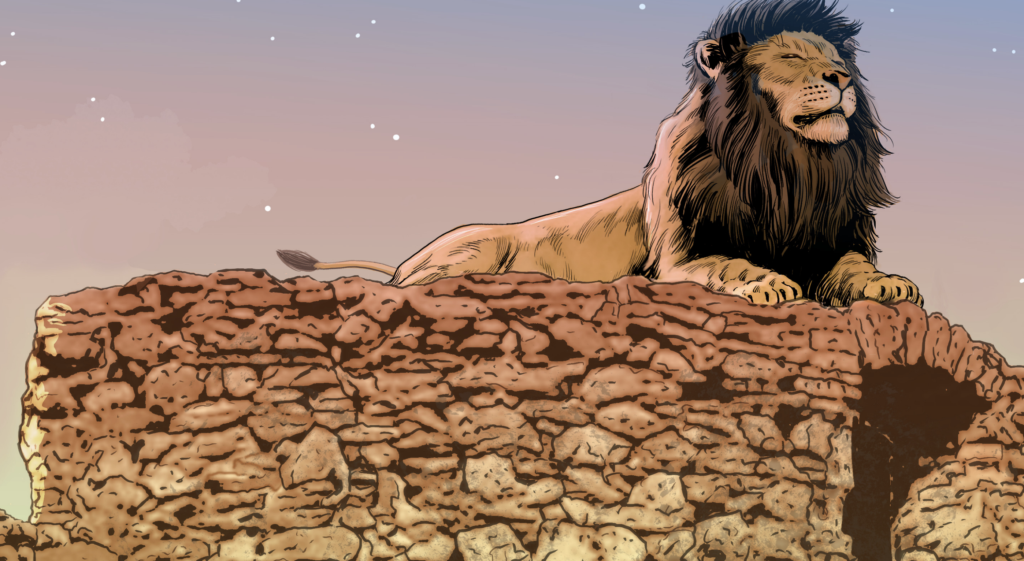
Howard himself described Kane as a knight errant, and Zircher built the title The Lion Errant around that idea. “The title refers partly to Yvain, the Arthurian knight who befriends a lion, and partly to Howard’s description of Solomon Kane as a knight errant,” Zircher says. “And, of course, the lion itself is important to the story.”
Conan may have become Howard’s great pop-cultural colossus, but Zircher argues that Kane casts a surprisingly long shadow of his own.
“Solomon Kane has always been one of Howard’s most influential characters,” he says. “You can see echoes of him in generations of dark-garbed avengers, vampire hunters, and witch hunters, from Vincent Price in Witchfinder General and Hammer Horror’s Captain Kronos to Vampire Hunter D, Hellsing, V for Vendetta, Van Helsing, The Witcher, and others.”
Zircher had wanted his chance with Kane for years, and it finally presented itself.
“I’d already done Conan work, and initially I was brought in to do more,” he says. “I love Conan, but I also like exploring new things and taking on new challenges. As a lifelong Solomon Kane fan, I made my case for bringing Kane back to comics.”
And he got the yes.
But that left a more interesting question: if you finally get to bring back a character you’ve loved your whole life, where do you take him that readers haven’t already seen?
Zircher is sending Kane to India (after Howard sent him there first)
The series opens with Kane fighting his way out of a slaver ambush in the night alleys of Malindi, on the Swahili Coast, and carries him across the sea to Mughal-era India. The route comes straight out of Howard. “Howard alluded to Kane traveling all over the world in the original stories. In The Moon of Skulls, for instance, he mentions Kane having adventured in Hindustan (India),” Zircher says.
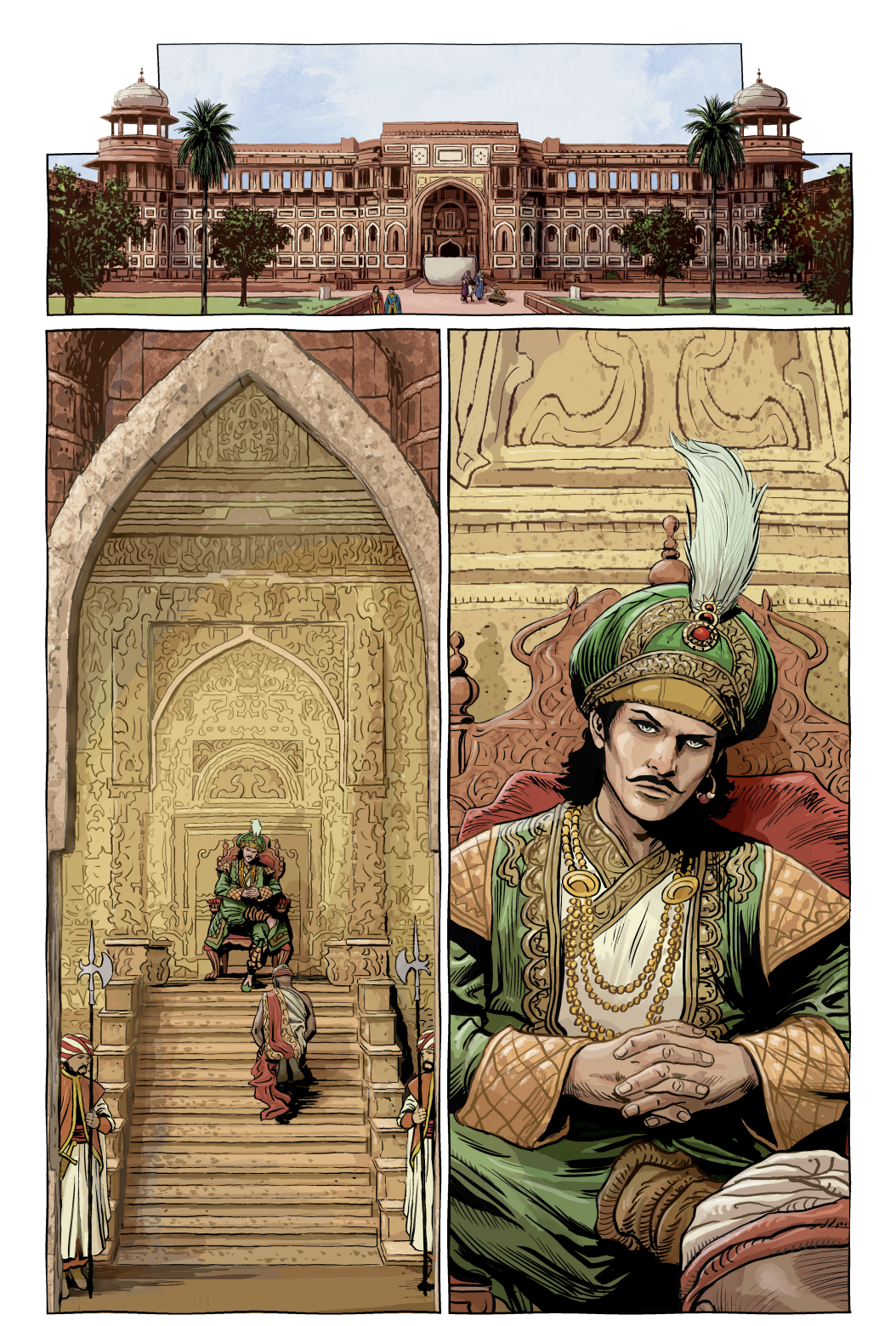
He has spent years working the map Howard left behind. “I’d already done stories set in Wales, Hungary, Italy, and Africa, so it felt like the right time to explore one of those places Howard mentioned but never really showed us.” When he floated the idea, “my editor and I both immediately loved the idea of sending Kane into Mughal-era India.”
The India Kane walks into has a ruler history remembers. Rani Durgavati ruled as part of the Gond dynasty, which commanded the Garha-Katanga kingdom in the sixteenth century, and, in Zircher’s words, she “stood against Akbar the Great, ruler of one of the largest and most powerful empires in the world.”
She brought her court with her onto the page. “Her son, her man-at-arms, her advisor, and her brother-in-law were all real historical figures, and they all appear in the series. On the Mughal side, we have Emperor Akbar, his general Asaf Khan, and his regent Qara Bahadur Khan.” Zircher keeps the invention anchored: “There’s a heavy supernatural element, but the historical characters’ fates still line up with the historical record.”
Zircher’s choice to ground this story in real history required a significant undertaking in self-education. “I picked up another ten or eleven books while preparing for the series—costumes, architecture, history, Hinduism—along with doing a lot of reading online.” Foremost among them was Nandini Sengupta’s Rani Durgawati: The Forgotten Life of a Warrior Queen. “Durgavati really fascinates me,” he says, “and I hope Ms. Sengupta will forgive some of the liberties I took bringing her into a sword-and-sorcery story.”
A villain out of the Puranas, a vampire that hangs upside down
“Mythology is central to The Lion Errant, especially stories from the Puranas,” Zircher says. These great Hindu compendiums were a wellspring of inspiration for Zircher, who notes that their “stories are full of gods and demons, which made them an incredibly rich source for the supernatural side of the book.”
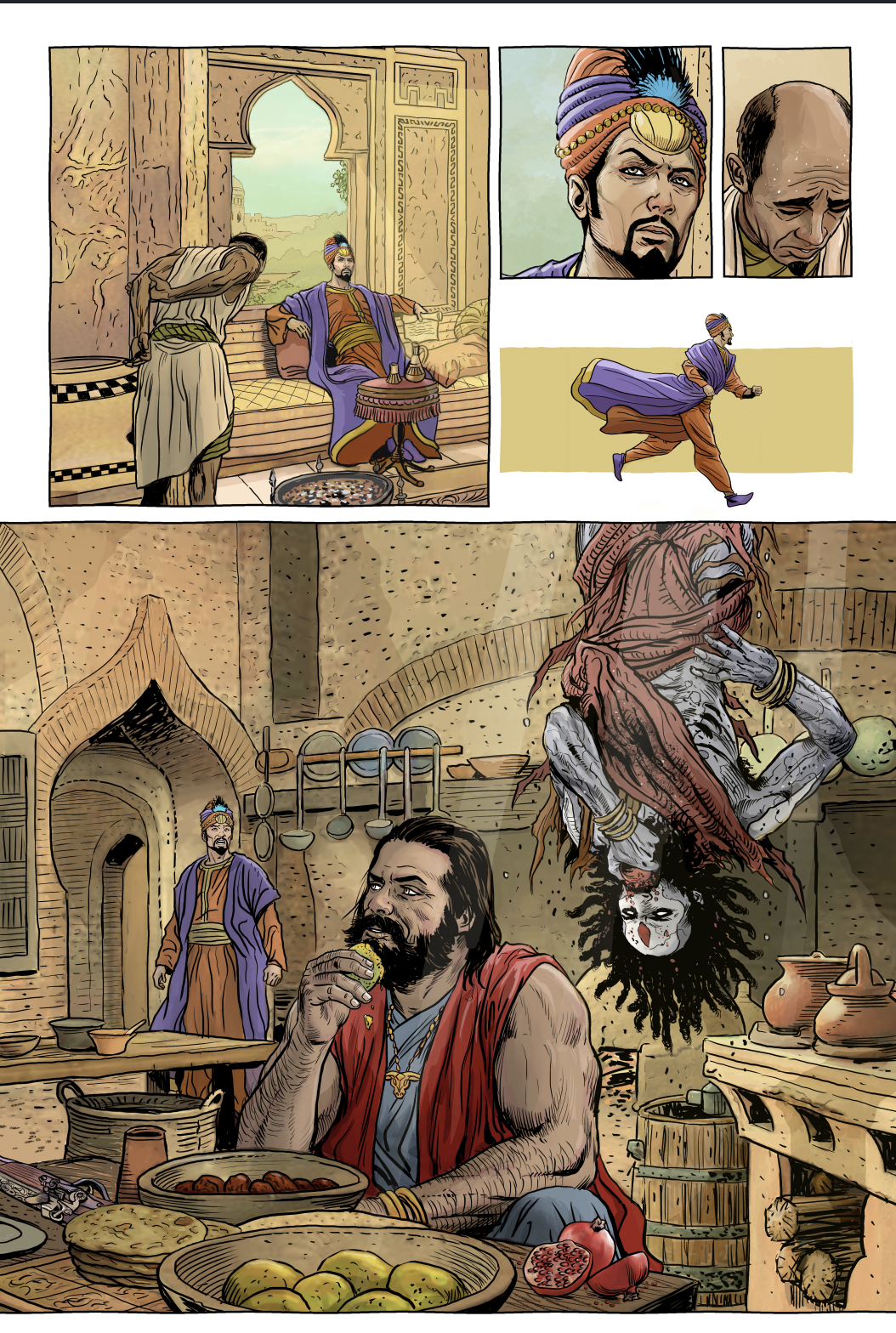
Out of that reading came the series’ main villain: the Mughal general Ramih Khan. “Ramih was inspired by a story I came across in the Puranas about a character who rebelled against the divine. He’s really the piece that locks the history and mythology together. I can’t say much more without spoiling things, but readers paying close attention will spot the clues (and probably see some of those planted seeds more clearly on a second read).”
Then there’s Lopesh, the book’s other monster: a vetala, a corpse-claiming spirit out of Indian folklore. “When I was looking for the story’s other villain, I became fascinated by the imagery around the Kapalika and Aghori ‘death monks,’ but I didn’t want to just turn a monk into the bad guy. I wanted something rooted in Indian folklore and horror. Vetala hanging upside down have such a strange, striking visual presence that pairing one with the monk became irresistible.”
One set of hands
All of that—the history, the mythology, the architecture, the tiny details pulled from Howard’s canon—is easier to understand once you know how The Lion Errant is being made.
Zircher is both writer and artist. There is no handoff between the person deciding where Kane goes and the person deciding what he sees when he gets there. If Zircher finds a historical detail he loves, he can put it on the page. If a scene needs rain, dust, shadow, a particular costume, or a certain expression on Kane’s face, he can make that decision while he is telling the story rather than translating it into instructions for somebody else.
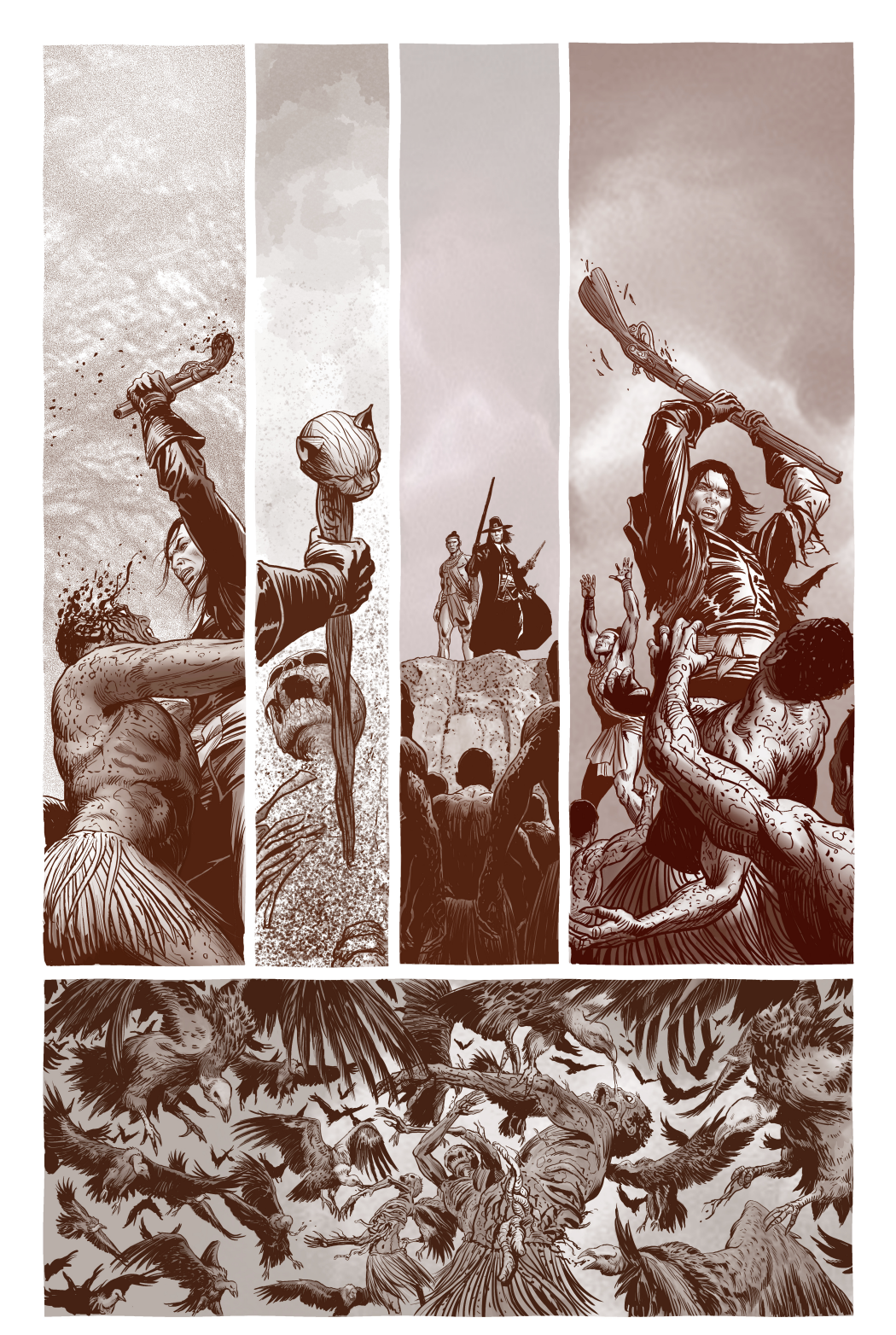
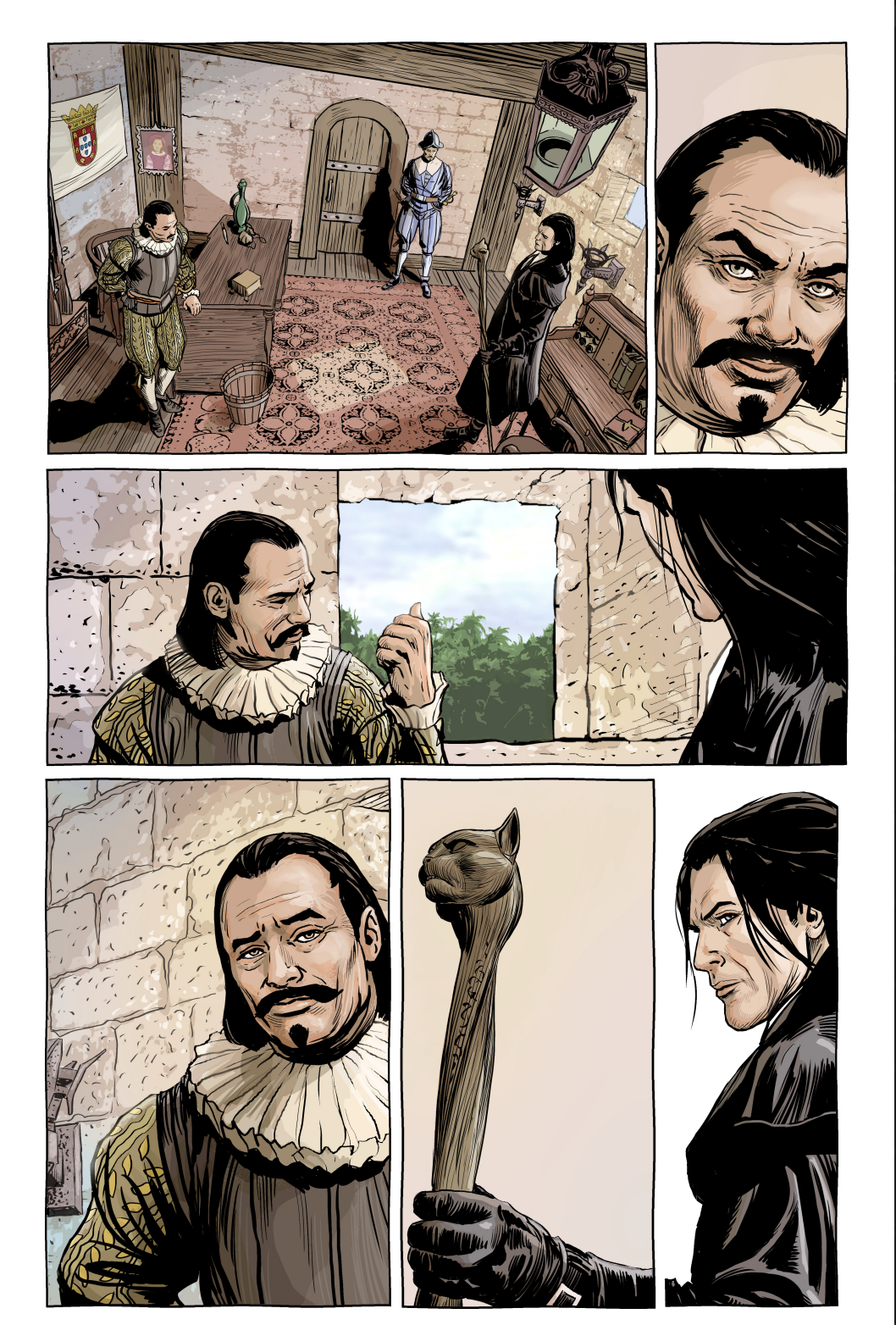
That freedom is most obvious in details almost nobody would notice unless they knew to look for them. “The coastal marker and the church in Malindi that appear in issue one are real,” Zircher says. “The Portuguese port, Fortaleza de Diu, is another historic location that appears in the series.” None of that research is required reading, but that’s part of the point. “No one needs to read a history book to enjoy a Solomon Kane story,” he says, “but that background helps build a convincing fictional world.”
The same freedom lets Zircher reach deeper into Howard’s mythology without treating those elements like obligatory references for longtime fans.
“As readers will see in issue two, N’Longa (Kane’s longtime friend) is introduced,” Zircher says. N’Longa, the shaman from Howard’s original stories, is closely tied to one of Kane’s signature possessions: the ancient, cat-headed staff he carries through the series.
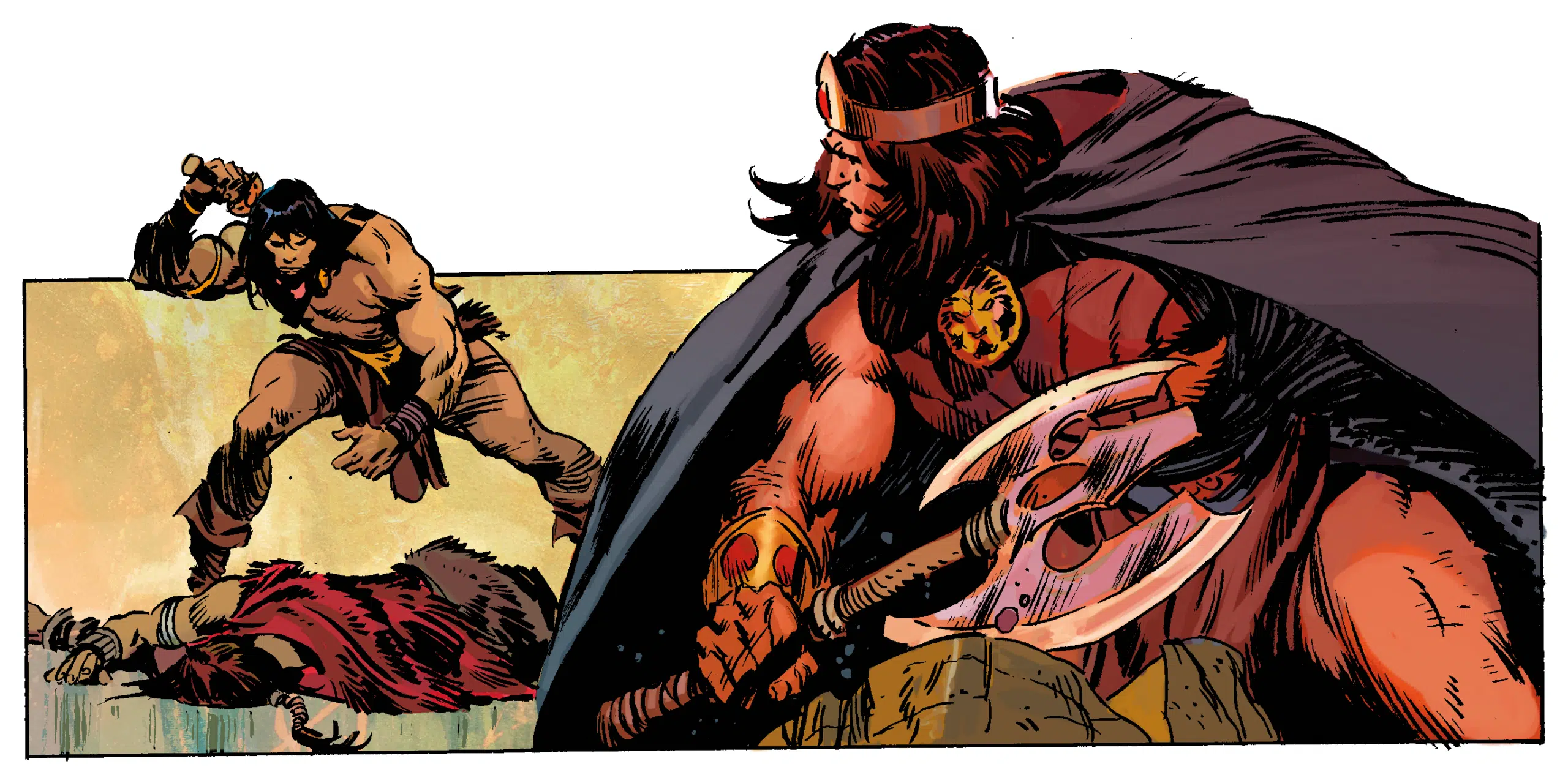
“The staff is a powerful mystical artifact of incredible antiquity, so old it may even be otherworldly, from before mankind,” Zircher says. In Howard’s stories, he notes, it can “ostensibly connect Kull, Conan, Bran Mak Morn, Solomon Kane, and others.”
And Zircher isn’t treating the staff’s mythology as settled territory. “Some of its powers are already known to readers,” he says. “Some aren’t.”
That may be the clearest expression of what Zircher has been given with The Lion Errant: room to take a character he has loved for years, follow Howard into places the original stories only hinted at, and decide for himself what belongs on the page.
Solomon Kane: The Lion Errant #1 is available now, with issue #2 arriving later this month.